A pool that looks clean isn't always a pool that's actually balanced — and a pool that's balanced doesn't always look sparkling on day one. Keeping your water truly healthy comes down to a handful of factors working together, not just tossing in chemicals when something looks off. Here's what actually goes into a clean, balanced pool.
Contact FTG Pool | Pool Cleaning Company
It's easy to think chlorine does all the work, but chlorine only performs well when the water around it is balanced. If your pH, alkalinity, or calcium hardness are off, chlorine becomes less effective — meaning you could be adding plenty of it and still dealing with cloudy water, algae, or irritation.
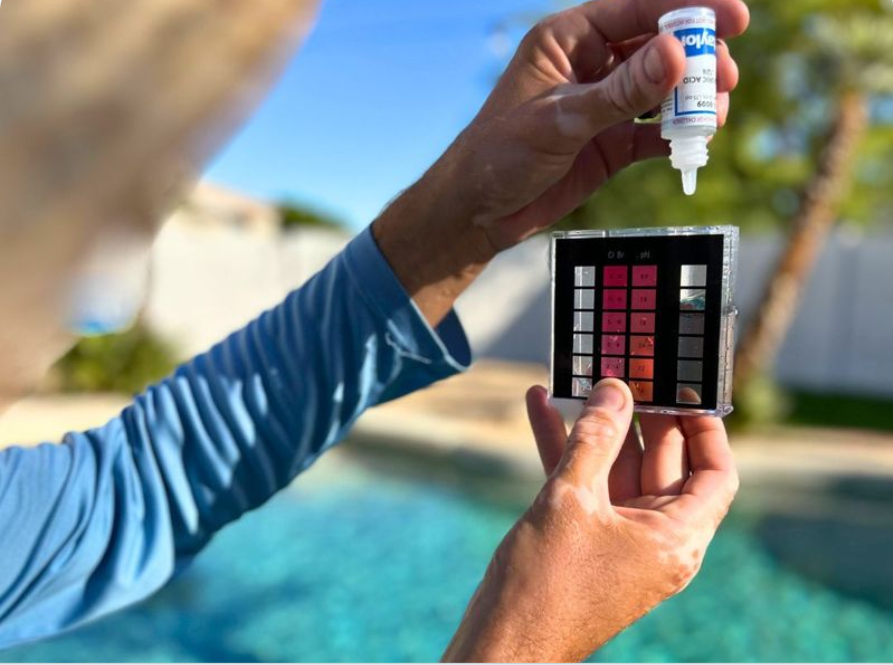
pH This measures how acidic or basic your water is. Too low, and it can corrode equipment and irritate skin and eyes. Too high, and chlorine loses its ability to sanitize effectively, which often shows up as cloudy water.
Total Alkalinity Think of alkalinity as pH's stabilizer. When alkalinity is off, pH tends to swing unpredictably, making it much harder to keep the water balanced day to day.
Calcium Hardness Water that's too soft can pull calcium from your plaster, tile, and equipment. Water that's too hard can lead to scaling and cloudy water. This one matters especially for the long-term life of your pool's surfaces.
Sanitizer Levels (Chlorine or Salt System Output)This is what's actually killing bacteria and algae in real time. Even with everything else balanced, sanitizer levels still need to stay consistent — especially through heavy use, heat, and rain.
Cyanuric Acid / StabilizerThis protects chlorine from breaking down in sunlight. Too little, and your chlorine burns off fast. Too much, and it can actually weaken chlorine's effectiveness — a balance within the balance.
Balanced chemistry keeps the water itself healthy, but true cleanliness also depends on:
Cloudy water, algae blooms, stinging eyes, bleached swimsuits, and scaling on tile are usually symptoms of an underlying imbalance — not a random bad day for your pool. Chasing the symptom (like dumping in extra chlorine for cloudy water) without addressing the root chemistry usually means the problem comes right back.
A truly clean pool isn't about reacting to problems as they show up — it's about keeping pH, alkalinity, calcium hardness, and sanitizer levels working together consistently, week after week. When the chemistry is right, the water takes care of itself.
Not sure where your pool's balance stands right now? A quick water test can tell you exactly what's off — and what it'll take to get it dialed back in. Contact FTG Pool | Pool Cleaning Company